
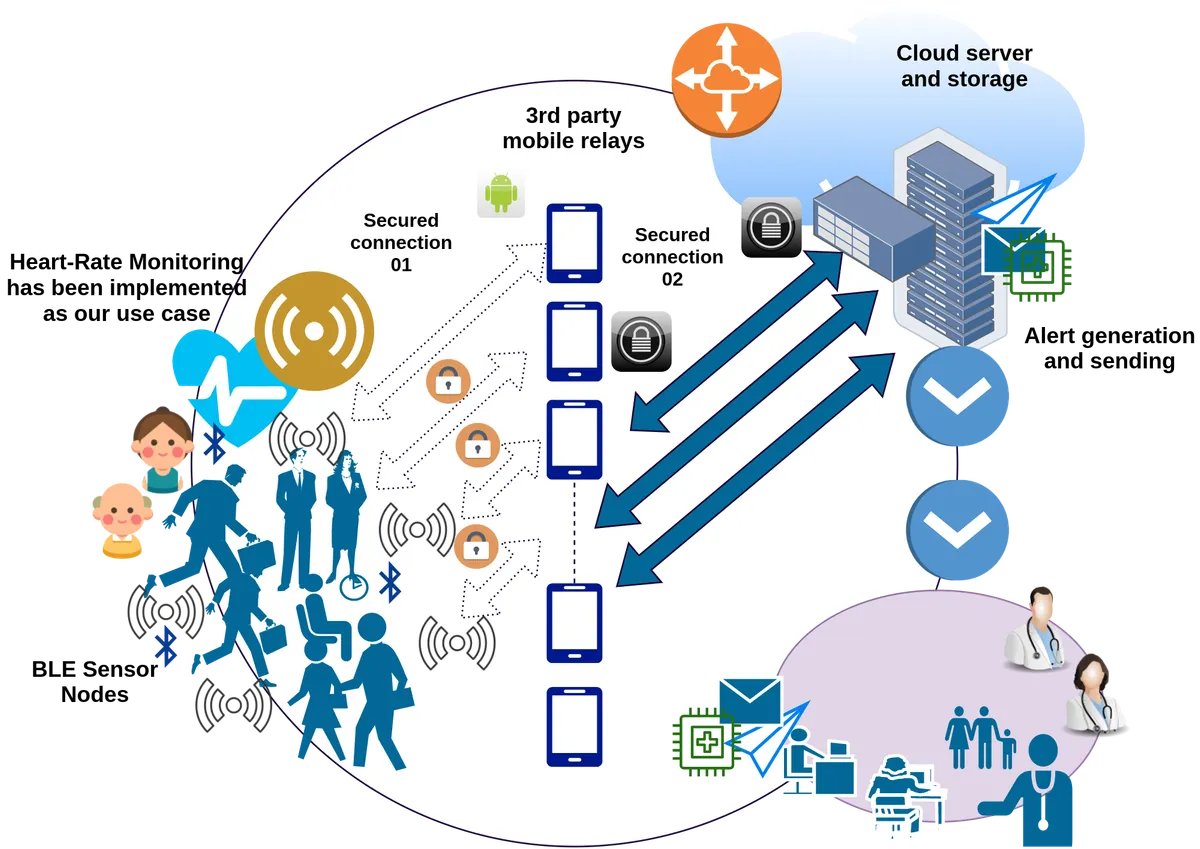
Typical wearable devices use a dedicated mobile phone as relay node to transfer the collected sensor data toa server. However, such relay nodes can be faulty or inactive due to various reasons, leading to interruptions of the communication link. To mitigate this challenge, we propose anovel security-enhanced emergency situation detection system, where 3rd party unknown mobile relays are used instead of dedicated gateways as opposed to many existing solutions for IoThealthcare applications. The proposed underlying key agreementand authentication scheme ensures anonymity and untraceability for both sensors (wearable devices) and relay nodes, and relies on symmetric key-based operations to function under resource-constrained environments. We have also developed a prototype of the system using commercial off-the-shelf devices to verify the proposed method’s validity and evaluate the performance advantage over existing approaches. Bluetooth Low Energy (BLE) communication technology is used to connect sensor nodes (wearable devices) and mobile relays. After sending medical data to the cloud server, the relay node is responsible for emergencydetection and alert generation.
Security_enhanced_Emergency_Situation_Detection_System_for_AALDownload