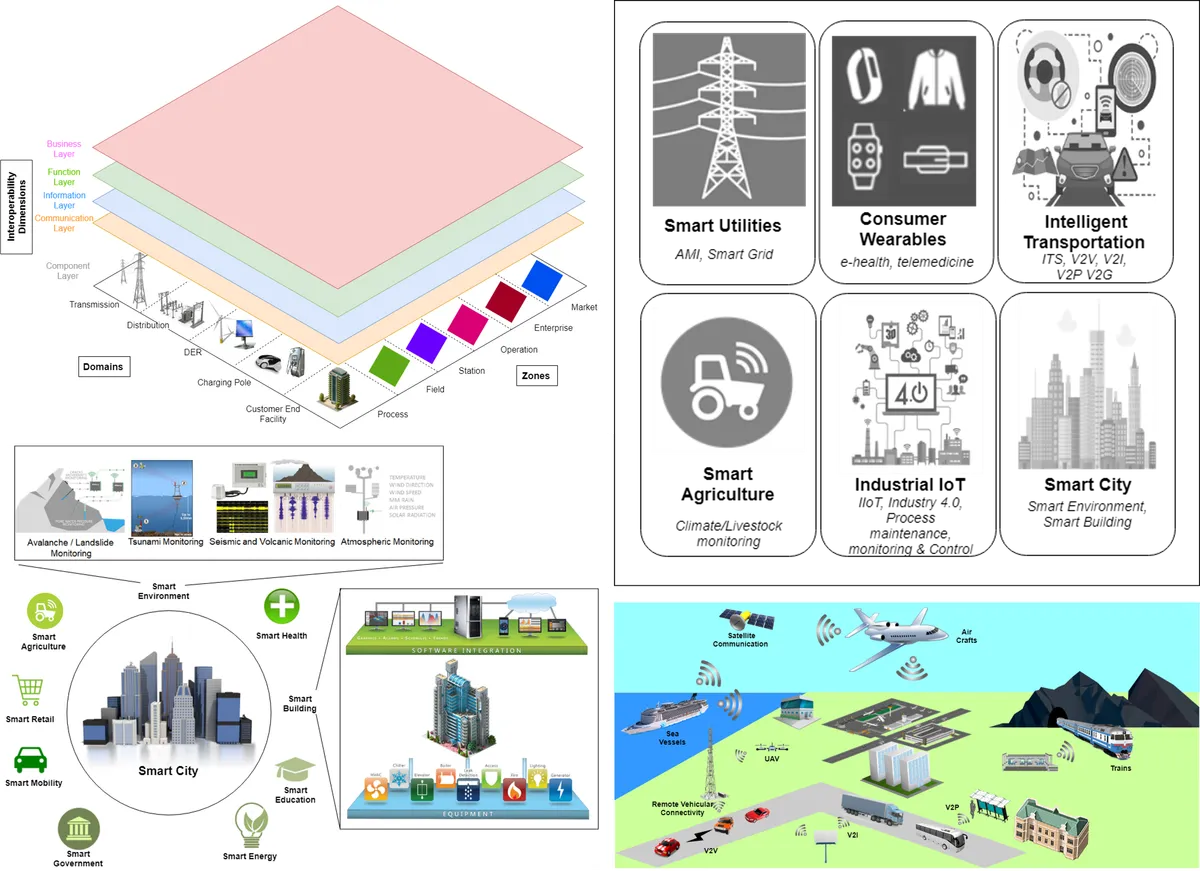
In a world with “things” and devices interconnected at every level, from wearables to home and building automation, to smart cities and infrastructure, to smart industries, and to smart everything, the Internet of Things (IoT) security plays a centric role with no margin for error or shortage on supply. Securing, including the authentication of these devices, will become everyone’s priority, from manufacturers to silicon vendors (or IP developers), to software and application developers, and to the final consumer, the beneficiary of the security “recipe” that will accompany these IoT products. Together, they need to adapt to the market demands, innovate and improve processes, grasp new skills and learn new methods, raise awareness, and elaborate new training and curricula programs.
In this chapter, we provide a thorough survey and classification of the existing vulnerabilities,
exploitable attacks, possible countermeasures, and access control mechanisms, including
authentication and authorization. These challenges are addressed in detail, considering both the
technologies and the architecture used. Further, this work focuses also on IoT intrinsic vulnerabilities as
well as the security challenges at every layer. Additionally, solutions for remediation of the
compromised security, as well as methods for risk mitigation, with prevention and improvement
suggestions are discussed.